Guides
Colour-Coded Bins in Dubai: Green, Black & Recycling Guide
Complete guide to colour-coded bins in Dubai: what goes in green vs black bins, municipality recycling rules, smart oasis stations, and bulky junk rules.
13 min readBy the TakeJunk Dubai team
Key takeaways
- Dubai Municipality's dual-bin system provides residential villas with a green bin for dry recyclables and a black bin for general domestic waste.
- Green bins accept clean cardboard boxes, mixed paper, plastic bottles, food tins, and beverage cans, but any food contamination ruins the entire batch.
- Black bins are strictly for non-recyclable household waste, organic food scraps, and non-hazardous domestic refuse sealed securely in trash bags.
- Dumping bulky furniture, discarded appliances, or construction debris inside or beside community wheelie bins carries municipal fines from AED 500.
- Bulky household junk, excessive relocation boxes, and broken furniture require specialized collection rather than standard kerbside wheelie bins.
As part of its long-term commitment to urban sustainability and the ambitious Dubai Integrated Waste Management Strategy 2041, the United Arab Emirates has transformed the way household waste is segregated and collected across the city. Central to this environmental initiative is the rollout of standardized, colour-coded wheelie bins across residential communities and villa districts. When encountering colour coded bins dubai residents frequently wonder which everyday household materials belong in each container, how contamination is handled, and what options exist when excess refuse overflows residential bins. While separating everyday packaging waste into designated bins has become standard practice, misunderstanding local sorting guidelines can lead to contaminated recycling trucks, unpleasant neighbourhood pest issues, and even municipal penalty notices. Whether you have recently moved into a family villa in Arabian Ranches, a townhouse in The Springs, or a modern property in Dubai Hills Estate, this comprehensive guide explains how Dubai's colour-coded bin system works, what belongs in green versus black bins, where to drop off specialized recyclable materials, and how to manage bulky household clearance compliantly.
The Dubai Municipality 'My City, My Environment' initiative
The modern residential bin framework across Dubai traces its foundations to the 'My City, My Environment' (Madinati Bayati) programme launched by the Dubai Municipality Waste Management Department. Designed to promote waste segregation at source and dramatically reduce the volume of municipal solid waste directed to regional landfill sites, the initiative introduced a dedicated two-bin collection system to private residential villa communities across the emirate.
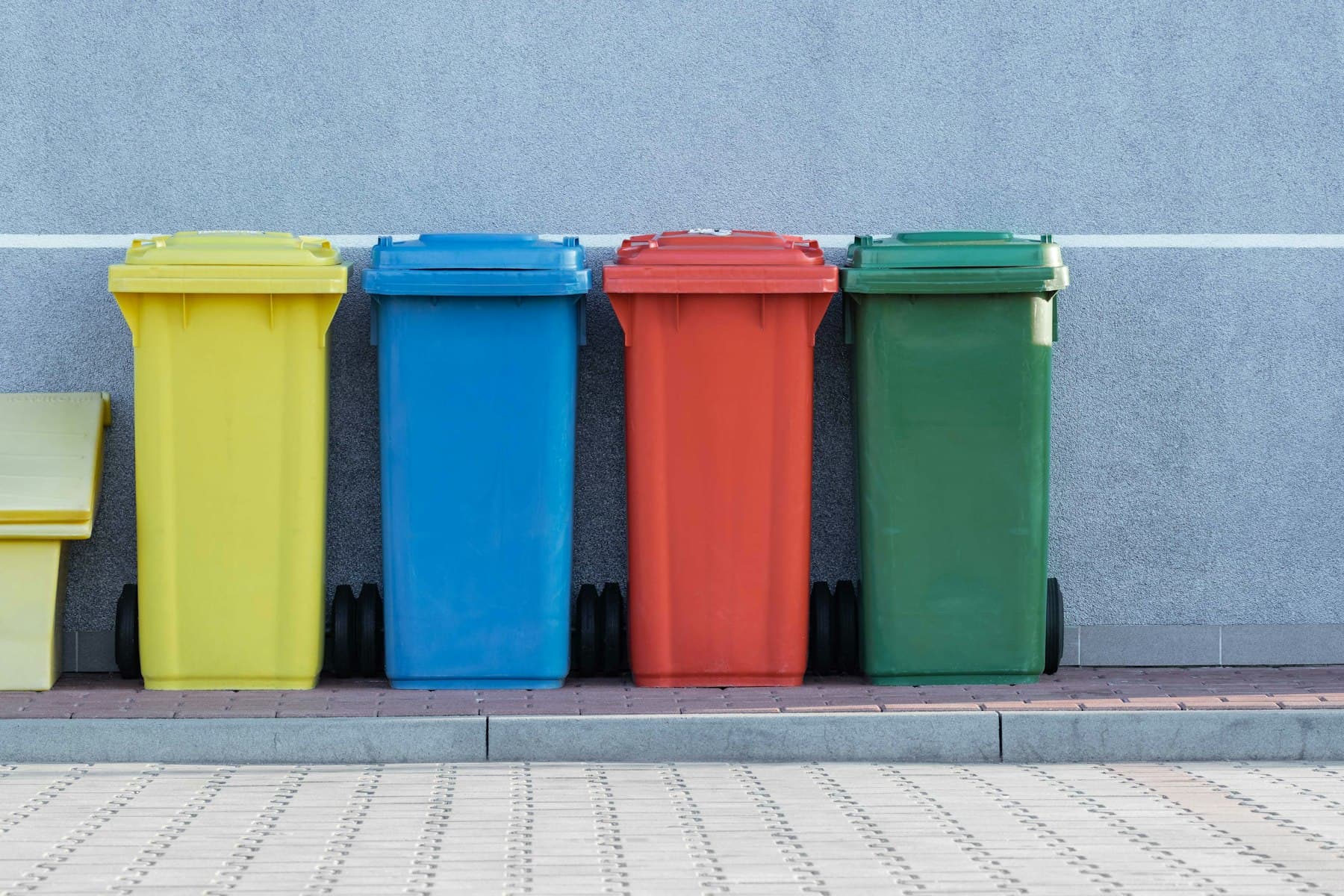
Under this programme, every registered residential villa is allocated two heavy-duty plastic wheelie bins, typically with a volume capacity of 240 litres each. Each container features a distinct lid and body colour to streamline separation at the household doorstep:
- The Green Bin: Reserved exclusively for dry, clean, recyclable packaging materials such as cardboard, paper, plastics, and metal cans.
- The Black Bin: Allocated for general municipal domestic waste, non-recyclable household refuse, and organic food scraps.
Specialized municipal collection vehicles—often equipped with dual-compartment hydraulic compactors or running on staggered schedule rotations—collect these distinct waste streams separately, transporting recyclables directly to automated sorting hubs and general refuse to treatment facilities.
The Green Bin: accepted recyclables and sorting rules
The green wheelie bin is your primary household tool for diverting valuable raw materials away from landfills and channelling them back into the UAE manufacturing economy. However, successful recycling depends entirely on clean, uncontaminated segregation.
Items that belong inside your green recycling bin include:
- Corrugated cardboard and carton boxes: Flattened moving boxes, ecommerce delivery parcels, shoe boxes, and food carton boxes. Flattening cardboard boxes before binning is essential to preserve bin volume.
- Mixed clean paper: Newspapers, magazines, office printer paper, school workbooks, envelopes, and paper grocery bags. Paper must be dry and free of greasy food stains.
- Plastic bottles and containers: Clear and opaque beverage bottles (water, soft drinks, juices), milk bottles, shampoo and body wash bottles, detergent flasks, and clean plastic tubs labelled with resin recycling codes 1 (PET), 2 (HDPE), and 5 (PP).
- Aluminium and steel cans: Empty carbonated drink cans, tinned food cans, pet food tins, and clean aluminium baking trays. Rinsing residual food sauces away prevents pest infestation.
- Metal bottle caps and screw lids: Steel jar lids and aluminium crown bottle caps can be dropped loose into the green bin.
Crucially, items placed into the green bin must be clean, empty, and dry. Greasy pizza box lids saturated with olive oil or unrinsed yoghurt pots containing dairy residues will quickly ferment under Dubai's high ambient heat, attracting fruit flies and contaminating entire truckloads of dry paper and cardboard. If an item cannot be rinsed clean, discard it in the black general waste bin.
The Black Bin: general domestic non-recyclable waste
The black wheelie bin serves as the destination for everyday household domestic waste that cannot currently be recovered through standard mechanical recycling facilities. In Dubai's arid climate, managing black bin refuse requires careful hygiene practices to control odours and repel desert pests.
Materials designated for the black bin include:
- Kitchen food waste: Vegetable peelings, leftover meal scraps, fruit rinds, meat bones, coffee grounds, and tea bags.
- Soiled paper and sanitary products: Used paper napkins, greasy pizza box bottoms, facial tissues, kitchen paper towels, baby nappies, and sanitary hygiene products.
- Ceramics and non-recyclable glass: Broken coffee mugs, porcelain dinner plates, drinking glasses, and heat-resistant Pyrex cookware (these have different melting temperatures from glass bottles and damage commercial recycling furnaces).
- Multi-layer composite packaging: Metallized crisp packets, plastic-lined snack wrappers, juice pouches, and contaminated cling film wrap.
- Dust, hair, and domestic sweepings: Vacuum cleaner bag contents, floor sweepings, and pet litter sealed tightly in plastic bags.
All organic and domestic refuse deposited into black wheelie bins must be securely bagged in tied plastic refuse sacks before placement in the container. Leaving loose food scraps or wet organic waste sitting directly at the bottom of the plastic bin results in rapid putrefaction, foul smells, and fly breeding within hours during Dubai's searing summer months.
Specialized recycling streams: blue bins and smart oasis kiosks
While the two-bin system handles the vast majority of day-to-day residential refuse, certain household materials require dedicated specialized drop-off points. To accommodate these items, Dubai Municipality has installed public recycling kiosks and Smart Sustainability Oasis centres across prominent public parks, residential plazas, and shopping destinations.
These dedicated recycling hubs feature specialized containers and colour streams:
- Blue bins and glass drop-off points: Glass bottles and culinary jars (green, brown, and clear glass) require separate collection to prevent broken glass shards from cutting workers or embedding in paper pulp during mechanical sorting. Many community centres in Jumeirah and Umm Suqeim provide specialized glass collection domes.
- Smart Sustainability Oasis centres: Modern 24-hour solar-powered automated municipal recycling stations that accept up to eighteen distinct material categories, including used domestic cooking oil, small household electronics, dry cell batteries, textiles, and paper cartons.
- Textile and clothing donation receptacles: Green or red charity textile bins located beside community mosques, retail malls, and petrol stations across the emirate. These bins collect wearable clothing, shoes, bed linen, and blankets for international humanitarian aid programmes.
- Electronic waste receptacles: Many retail electronics stores and major hypermarkets host specialized drop-off bins for dead smartphones, charging cables, alkaline batteries, and compact printer cartridges.
Leveraging these public drop-off points ensures specialized hazardous or delicate materials receive responsible processing without contaminating regular household wheelie bins.
What strictly does NOT belong in residential wheelie bins
Residential wheelie bins are engineered exclusively for light, bagged domestic refuse and consumer packaging. Using green or black bins for heavy industrial materials, toxic substances, or bulky household goods poses severe hazards to sanitation personnel and collection equipment.
You must never place any of the following items inside residential wheelie bins:
- Bulky furniture and mattresses: Discarded sofas, dining chairs, wooden wardrobes, flat-pack bed frames, and spring mattresses will jam compactor hoppers and cannot be collected by standard rear-loading municipal trucks.
- Large household appliances: Washing machines, refrigerators, air conditioning units, and domestic water heaters contain heavy metals, copper motor windings, and chemical coolants that require dedicated appliance removal.
- Construction, demolition, and renovation rubble: Ceramic floor tiles, concrete block rubble, drywall sheets, plasterboard dust, and cement bags are far too dense for domestic plastic bins. The excessive weight can snap wheel axles and crack compactor lifting arms.
- Hazardous liquids and flammable chemicals: Mineral engine oils, industrial solvents, chemical paint tins, swimming pool chlorine tablets, and pressurized gas cylinders represent severe fire and explosion risks in waste compaction trucks.
- Automotive lead-acid batteries and tyres: Car batteries contain concentrated sulphuric acid and heavy lead plates that demand regulated industrial hazardous waste handling.
When clearing obsolete furniture or bulky items, always arrange dedicated furniture removal rather than attempting to force oversized objects into residential wheelie bins.
Penalties for dumping bulky waste beside community bins
A frequent sight in developing urban neighbourhoods is discarded furniture or bulky junk abandoned on pavements, roadside kerbs, or beside communal bin enclosures. In Dubai, this practice is strictly prohibited and actively penalised by municipal authorities.
Under Dubai Municipality Local Order No. 11 of 2003 regarding Public Cleanliness and associated municipal circulars, abandoning bulky waste, domestic furniture, or renovation debris in public areas, vacant plots, or road verges constitutes illegal fly-tipping. Municipal waste management inspectors regularly patrol villa neighbourhoods and commercial quarters to issue violation notices.
Financial and administrative repercussions for illegal dumping include:
- Mandatory municipal fines: Fines for dumping bulky waste or furniture outside designated collection facilities start from AED 500 for a first offense and can escalate to AED 1,000 or more for repeated or commercial-scale dumping.
- Clean-up cost recovery charges: The offending property owner or registered tenant may be billed for the full municipal labour and transportation expenses incurred to clear the abandoned debris.
- Community developer penalties: Master developer community associations—including Emaar Community Management, Nakheel Community Management, and Dubai Holding—issue independent community violation penalties directly against the property's Title Deed or Ejari tenancy contract.
- Holding of move-out security deposits: Building and master community management teams will withhold move-out permits and tenancy clearance certificates until all abandoned waste is removed and associated administrative fines are paid in full.
Disposing of bulky items through licensed clearance specialists protects you from costly fines and maintains the visual appeal of your neighbourhood.
Waste management in high-rise towers vs villa communities
The physical mechanisms of waste disposal differ significantly between ground-level villa estates and vertical high-rise apartment towers. While villa residents manage individual two-bin wheelie containers outside their garden gates, apartment dwellers in districts like Dubai Marina, Downtown Dubai, and Business Bay rely on shared building infrastructure.
Common waste setups across Dubai apartment towers include:
- Dual-action vertical waste chutes: Many contemporary towers feature automated wall chutes on every residential floor equipped with electronic selector buttons. Residents press 'Recycle' for dry packaging or 'General' for domestic waste before depositing small tied bags into the pneumatic chute hopper, which routes them into separate basement compactor skips.
- Floor service rooms with dual containers: In buildings with single-stream chutes, the chute hopper is strictly reserved for bagged general waste. Dedicated green recycling bins are located inside service closets adjacent to the service lift lobby for dry cardboard, paper, and plastic bottles.
- Basement bulk sorting and compaction bays: Tower facilities management teams operate large hydraulic waste compactors in underground loading docks. Specialized maintenance staff sort incoming waste streams daily before municipal or private concessionaire collection.
Regardless of tower design, apartment residents must never force bulky cardboard boxes, broken chairs, or heavy objects down vertical waste chutes, as blockages can trap rotting waste between floors and create major structural fire hazards.
Master developer community guidelines for residential bins
Residents living in master-planned gated villa communities—such as Arabian Ranches, The Meadows, Damac Hills, and Jumeirah Village Circle—must comply with strict community guidelines governing bin placement, hygiene, and presentation.
Key rules enforced by private community management associations include:
- Standardized bin presentation timings: Bins should be rolled out to the edge of the street or roadside kerb no earlier than the evening prior to scheduled collection (typically after 7:00 PM), or early on the morning of collection.
- Mandatory bin retrieval after collection: To preserve community aesthetics and prevent street clutter, empty wheelie bins must be returned inside your private villa perimeter wall or designated bin storage niche within twelve hours following collection.
- Keeping bin lids fully closed: Bins overflowing with excess refuse where the lid remains open are strictly banned. Open bins allow desert winds to scatter loose litter across community landscaping, attract stray cats, and generate offensive odours in summer heat.
- Regular bin washing and sanitization: Villa occupants are responsible for maintaining the cleanliness of their allocated containers. Rinsing bins monthly with household disinfectant prevents sticky grime and insect breeding.
Failing to adhere to these community presentation standards can trigger automated developer warning notices and community violation charges.
What to do when your waste overflows the bins
Certain life events generate immense volumes of waste that far exceed the 240-litre capacity of standard residential wheelie bins. Moving into a new villa, completing major furniture replacements, holding large festive family gatherings, or undertaking extensive garden landscaping overhauls can produce mountains of excess packaging and debris.
Practical strategies for managing overflow waste include:
- Dismantling and flattening cardboard boxes: Moving into a new home often leaves dozens of bulky removal cartons. Dismantle every box, cut down large corrugated sheets, and stack them neatly. Learn more in our dedicated guide on cardboard box recycling in Dubai.
- Requesting additional or larger wheelie bins: Large families residing in expansive villas can apply through Dubai Municipality or their private community manager for supplementary 240-litre or 360-litre wheelie bins upon paying nominal annual service fees.
- Dropping recyclables at municipal centres: Transport excess dry cardboard, plastic packaging, and beverage containers to a local municipal drop-off hub or community recycling kiosk.
- Booking dedicated professional bulk collection: When dealing with heavy clutter, old appliances, or discarded furniture, professional clearance remains the most practical and rapid solution.
Taking proactive steps prevents unsightly piles of refuse from accumulating outside your property while awaiting your next scheduled collection day.
Arranging professional clearance for bulky household items
While Dubai's colour-coded wheelie bins function seamlessly for daily kitchen refuse, cardboard parcels, and drink containers, they are never intended for bulky household transformations. Attempting to chop up a broken dining table to stuff into a black bin or abandoning a worn mattress beside a green bin will only create friction with neighbours and invite municipal fines.
When you need comprehensive clearance, TakeJunk offers a complete, hassle-free alternative. Our trained teams arrive at your home, carry bulky items directly from your rooms, dismantle oversized flat-pack furniture, clear piles of flattened moving cartons, and haul everything away in specialized vehicles. Read our comprehensive overview on furniture recycling in Dubai or review our guide on Dubai Municipality bulky waste collection rules to determine which clearance method best fits your property.
Whether you require swift cardboard box removal after an international relocation or dependable junk removal to prepare a villa for handover, we handle sorting, transport, and delivery to certified UAE recycling facilities responsibly.
Frequently asked questions
What belongs in the green bin in Dubai?
The green bin is reserved for clean, dry, recyclable materials. This includes corrugated cardboard boxes, newspapers, clean writing paper, plastic water bottles, shampoo containers, aluminium drink cans, and tin food cans. All containers must be rinsed clean and emptied of food residues.
Can I put glass bottles into my green residential bin?
In most residential villa communities, glass is excluded from standard green bins because broken shards can injure sanitation workers and contaminate paper recycling streams. Glass bottles and jars should be taken to dedicated community recycling kiosks or municipal drop-off domes located at local public parks and shopping centres.
What should I do if my moving boxes will not fit into my green bin?
Do not leave unflattened cardboard boxes stacked loose on the pavement, as desert winds will blow them across the community. Flatten all boxes neatly and tie them with string. If the volume exceeds your bin capacity, take them to a municipal recycling depot or book a dedicated cardboard box removal service.
Is it illegal to leave old furniture beside the community bins?
Yes. Dumping furniture, mattresses, or appliances beside communal bins or on pavements is illegal under Dubai Municipality Local Order No. 11 of 2003. Violators face fines ranging from AED 500 to AED 1,000, along with community developer administrative penalties.
How often are residential green and black bins emptied in Dubai?
Collection schedules vary by district and community management provider. Typically, black general waste bins are collected two to three times per week, while green recycling bins are collected once or twice weekly. Master-planned communities provide residents with specific weekday collection schedules.
Can I put garden grass clippings and tree branches into my black bin?
Small amounts of light domestic garden clippings sealed in refuse sacks can be placed in black bins. However, large tree branches, palm fronds, soil, and major landscaping waste are prohibited because they jam truck compactors. Large green waste requires specialized garden waste collection.
Want us to handle it?
Send a few photos on WhatsApp and we'll reply with a fixed price. Same-day pickups across Dubai, 7 days a week, 6:00 AM – 11:00 PM.